Food oil, a technical plasticiser and a dangerous solvent do not travel in one logic. Each line has its own tank, wash and paper rules. Mixing them “by default” is how a tanker is turned away at the ramp.
Food-grade: cleanliness beats a universal tank
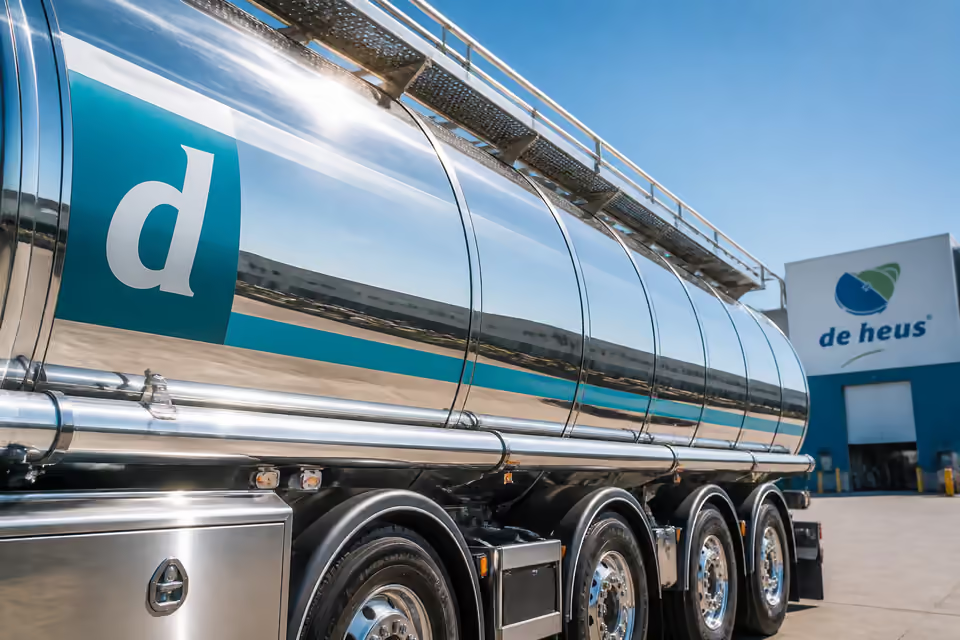
On food-grade transport the plant accepts a documented food contour: stainless tank, compatible history, wash the site recognises. Shine on the shell is not the proof.
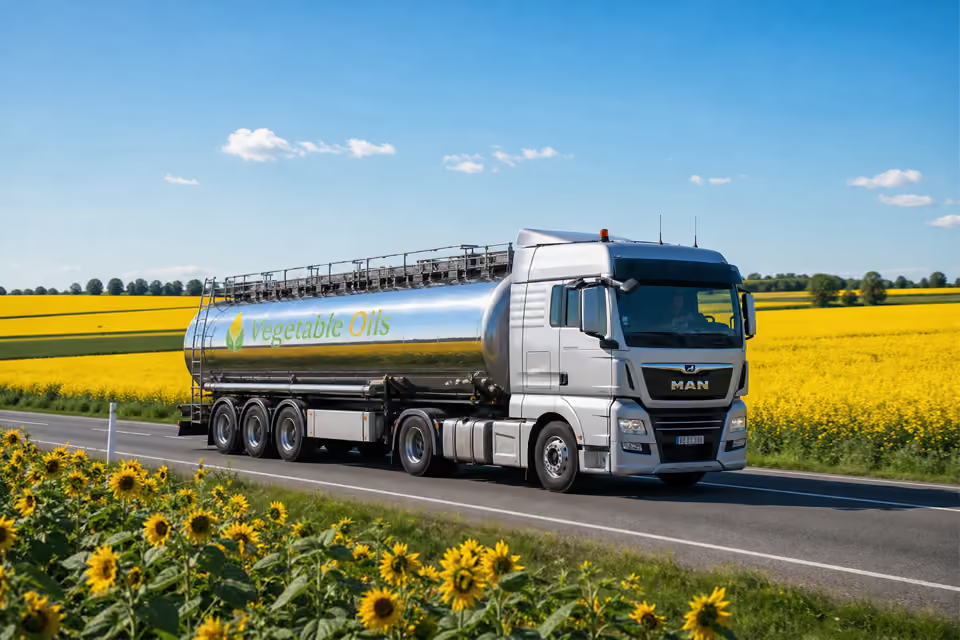
Sunflower and rapeseed oils are a working specialism of KDM Cargo — LAG and Magyar stainless tanks, 32 m³, steam jacket and air connection on the whole fleet. That kit still does not make every food liquid “the same trip”: syrups, dairy and juices add temperature and wash rules of their own.
If the receiver lists allowed previous cargoes, send the list with the request. We check it before the truck is assigned, not at the gate. Detail: food-grade tanker standards.
Non-hazardous chemicals: the product chooses the hardware
Non-hazardous chemicals are not “any tank will do”. Plasticiser, glycerine, latex and resin differ in metal, gaskets and allowed history. SDS or specs decide more than a casual name in mail.
A food-grade wash does not automatically clear a chemical load, and a chemical history does not automatically clear food. The contour is chosen from the file, then the tank.
Long CIS and China legs add time on the product in the shell. Viscosity and heat then matter as much as kilometres. See non-hazardous chemical logistics.
ADR: a separate clearance regime
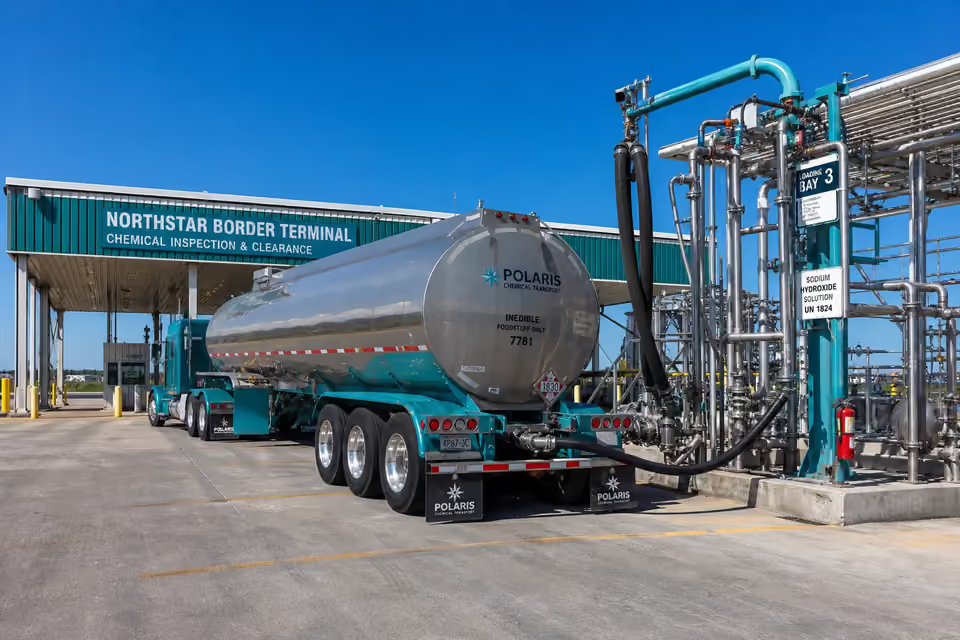
ADR does not start with “is a tanker free”. It starts with SDS: UN number, class, packing group. Without classification, rate and tank are a guess.
We do not publish a catalogue of ADR classes as a marketing list. Class is confirmed from the papers of that haul. If the file is incomplete, we say what is missing — we do not invent a class to fill the form.
Border and corridor do not replace class papers. Belarus–Russia still needs the pack before the truck is committed. Walkthrough: ADR tank transport Belarus–Russia.
Wash and history: shared base, different bars
All three lines need wash and history. The bar is not the same. Food often fails on odour and previous-cargo lists. Chemicals fail on substance group and gaskets. ADR fails on class sequence and missing papers.
Partner wash is matched per tanker: type and certificate. The working checklist is in tank wash and compatibility.
Steam jacket on the fleet is a tool, not a substitute for the right contour. Heat does not turn a chemical history into a food-grade tank.
How the corridor changes the job: Belarus and Russia
A Belarus or Belarus–Russia trip can look “short”. Intake rules are still local. A plant in Brest and a plant past Smolensk can reject the same tank for different previous-cargo lists.
Empty positioning still sits in the rate: the matching food or ADR tank may not stand at the loading gate. “Any free truck” is not a saving — it is a loading refusal.
Windows at origin and discharge move the calendar as much as kilometres. Put them in the request even as a hint.
We will match a tanker to your product
Send a phone number and the job in your own words. Product, volume and corridor speed clearance — with no price promised without parameters.
Kazakhstan and China: distance and stitching
Kazakhstan stretches time in the tank. Heat, viscosity and discharge method stop being “nice to have”. China often means a stitched chain, not a single truck from door to door.
Forwarding is the fourth service when own fleet is not enough or the chain has several legs. Control of attracted trucks stays with us: cargo, tank and corridor are still checked before the trip.
Do not describe “Asia” as one destination. Name the country and, when you can, the region. The calculation changes.
Turkey, Georgia and Europe: the intake point decides a lot
Turkey and Georgia are not a postcard south — they are discharge sites, fittings and, sometimes, a transshipment. Europe is a set of countries confirmed per route, not a decorative list.
Poland, Germany, Lithuania or another EU point is not one corridor. Slot, wash paper and bottom/top discharge change the tank we can assign.
If the EU leg needs a transfer at the border, that is a separate operation — see chemical transshipment at the EU border.
Comparing services in one request
One request can still be one product. Do not send “food or ADR, whichever is cheaper”. The cheaper wrong contour is a refusal at the ramp.
If you are unsure, describe the product and attach SDS or specs when you have them. We name the line and the next missing paper. The quote follows the match, not the other way around.
Checklist before the quote
Product name, volume, corridor, phone. For chemicals — SDS when you have it. For food-grade — receiver wash rules if they exist. For ADR — UN number / class from the file you have, not from memory.
Exact addresses can wait until the tanker is matched. Temperature and steam heat — mark if the product thickens in the season you are shipping.
Three answers to a lookalike request
“20 tonnes of oil, Belarus–Poland” is not yet a job. Food sunflower oil, technical oil and an ADR-classified oil product are three different tanks and three wash programmes.
We would not put food-grade cargo in a chemical history without wash and papers. We would not treat ADR as “chemicals with extra stickers”. The first reply is which line this is — then which tank is free for that line.
When the line is named, send a request with the minimum pack. The faster the contour is right, the fewer times the rate is rebuilt.
Name the line before the request
- Product as it isName, not a site label
- SDS / specs if you have themEspecially chemicals and ADR
- Receiver wash / previous-cargo ruleFile or quote from the plant
- Corridor at country levelEurope = country, not “EU”
Телефон и задача своими словами — достаточно, чтобы начать сверку цистерны.
Ask about choosing a tank service
Can one tanker do food and chemicals in a week?
Only if wash, history and the next product allow it. Food-grade after chemicals is a separate clearance, not a default.
How do you choose food vs chemicals vs ADR?
From the product and documents. We do not assign ADR from a verbal label, and we do not put food in a chemical history without a matching wash.
Do you list ADR classes on the site?
No. Class is confirmed from the papers of that haul. See ADR.
When is forwarding used?
When own fleet is not enough or the chain has several legs. Attracted trucks are still checked for tank, wash and corridor before the trip.
Is Europe one destination?
No. Country and point are confirmed per route. “Europe” in a request is not enough to assign a tank.
What if I only know the product in everyday words?
Send that plus a phone number. We will ask for the missing paper. Do not pick a line to make the form look complete.
Does a steam jacket decide the line?
No. The jacket is on the whole fleet. The line is still food, chemicals or ADR from the product file.
Where do I start?
How to prepare a request — then contacts.
We will match a tanker to the product
A phone number and the job in your own words are enough to start.