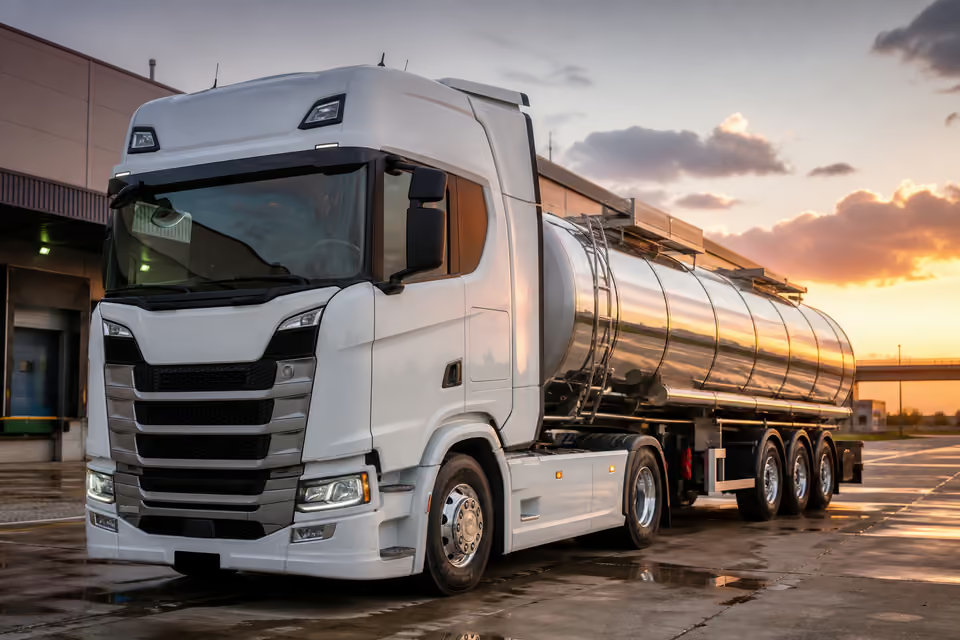
Shiny stainless does not make a tanker food-grade. You need a surface without dead zones, a load history and a wash the plant accepts. We do not paste a steel grade from the site onto your batch: the tank is matched, then confirmed.
What “food-grade” means here
A compatible history, partner wash with a certificate, receiver rules. See food-grade service and wash.
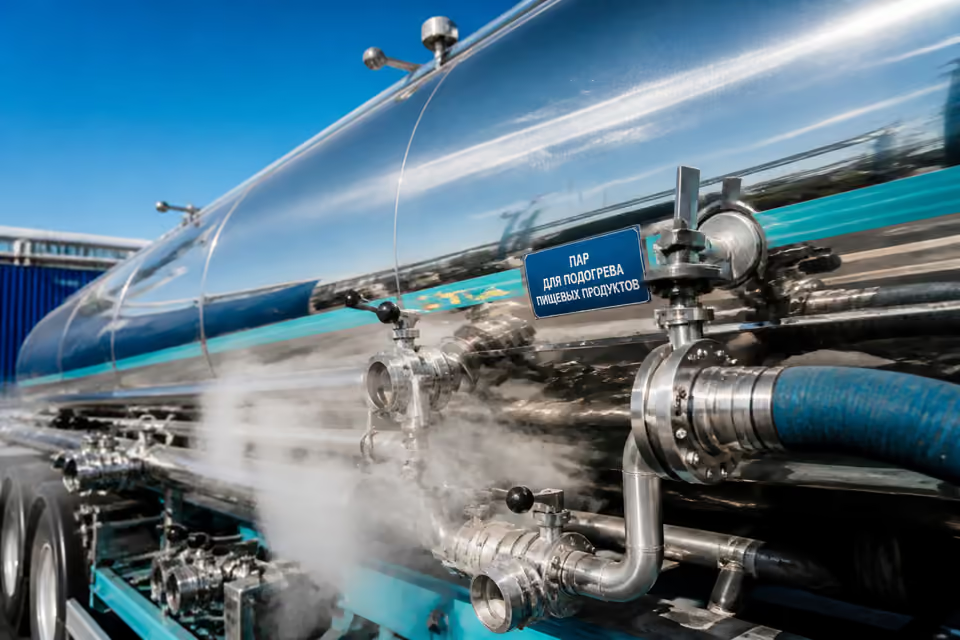
KDM Cargo runs LAG and Magyar stainless tanks, 32 m³, steam jacket and air on the whole fleet. That is the working kit for food oils — still checked per trip.
The plant signs a tanker, not a fleet slogan. If the previous-cargo list is missing, we start the match and hold confirmation until the list arrives.
Stainless, welds, inner surface
Food plants care about cleanability: welds, corners, dead legs. A pretty outer shell does not prove the inner one.
We do not publish a steel-grade table as a substitute for trip clearance. If the plant names a standard, send it — we match or we say no.
Compartments, volume, balance
32 m³ is the fleet volume. Lots smaller than a full shell may need compartments or a different loading plan. Write the tonnage, not “a tanker”.
Payload about 24 t is a physical limit, not a marketing “up to”. Overfilling is not a negotiation.
Insulation vs steam jacket
A thermos keeps; a jacket heats when steam is connected. They are not the same — steam jacket.
Food oils in winter often need the jacket. They never need a guess that “stainless stays warm by itself”.
Wash, certificate, history
Certificate per tanker, cleaning type, previous cargo list. The trio is in wash and compatibility.
“We only haul oils” as a story is not a history print. Plants read the last loads.
Partner wash is tied to that tanker. A generic PDF without tank number, date and cleaning type does not close clearance.
We will match a tanker to your product
Send a phone number and the job in your own words. Product, volume and corridor speed clearance — with no price promised without parameters.
How corridors change the bar
A Belarus plant and an EU plant can reject different histories. Europe is per country. Russia is not “the same food rule as Brest”.
Longer legs add temperature. The tank kit stays; the regime changes.
Checklist before you choose a tank
Product, plant wash rule, previous-cargo list, volume, discharge type, steam at site. Phone. That is enough to start matching.
Photos of trucks are optional. The plant’s PDF is not.
Example: one batch, one tank
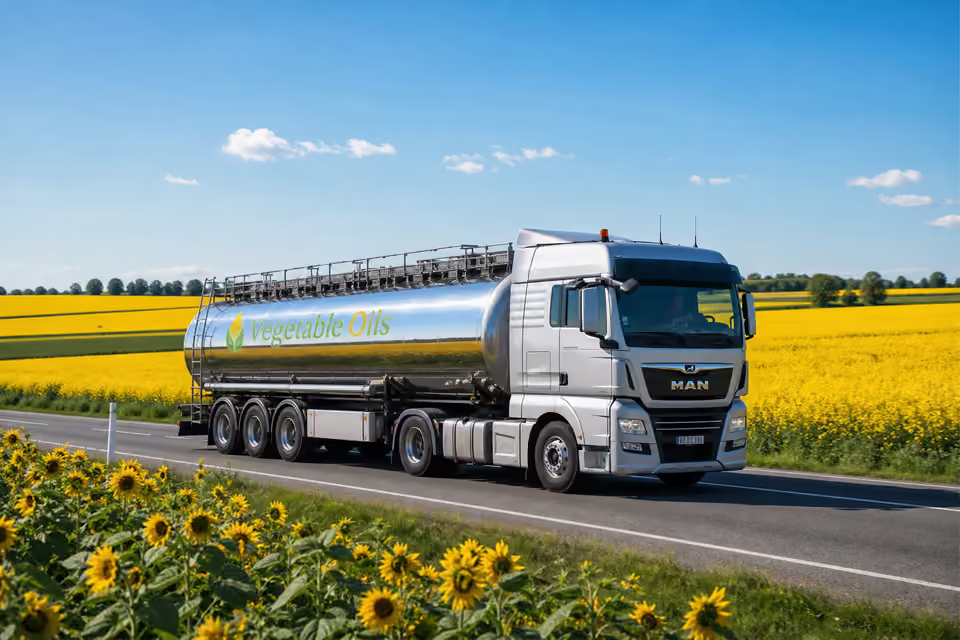
Food sunflower oil, 24 t, Belarus to a Polish plant with a previous-cargo list. We look for a food contour, wash programme, jacket if the week is cold, bottom discharge if the rack is bottom.
A free chemical-history tank is not a candidate, even if it is empty today.
Send the list and the product. The tank is chosen after the plant’s rule, not before.
Claims worth checking
“Universal food tanker”, “always clean”, “any EU country” — ask for the paper. We would rather show the certificate of this tanker than a slogan.
Needed company documents are available on request. They do not replace trip clearance.
Ask about the tanker
Do you publish steel grades?
Not as a marketing table. If the plant specifies a standard, send it — we match the tanker or decline.
Is 32 m³ the only size?
That is the working fleet volume. Tonnage still has to fit payload and compartments.
Is jacket the same as food-grade?
No. Jacket is heat. Food-grade is history, wash and contour.
Can a chemical tanker become food-grade after wash?
Only after a documented clearance. It is not a default overnight change.
Do LAG and Magyar tanks matter to the plant?
They are the fleet we run. The plant still signs wash and history, not the brand sticker.
How do I request a food-grade tank?
Product + plant rule + tonnes + phone. Contacts.
We will match a tanker to the product
A phone number and the job in your own words are enough to start.