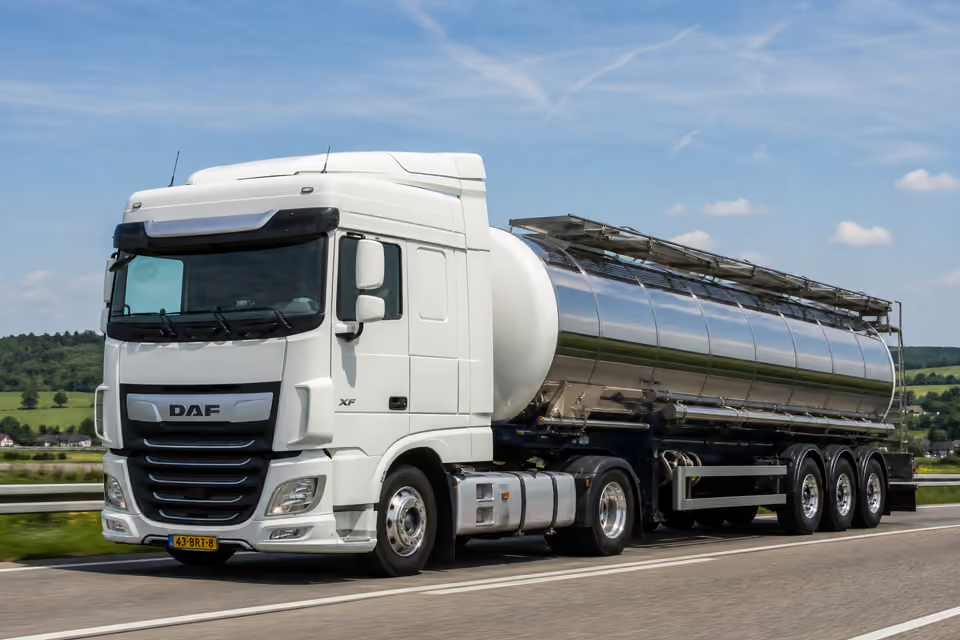
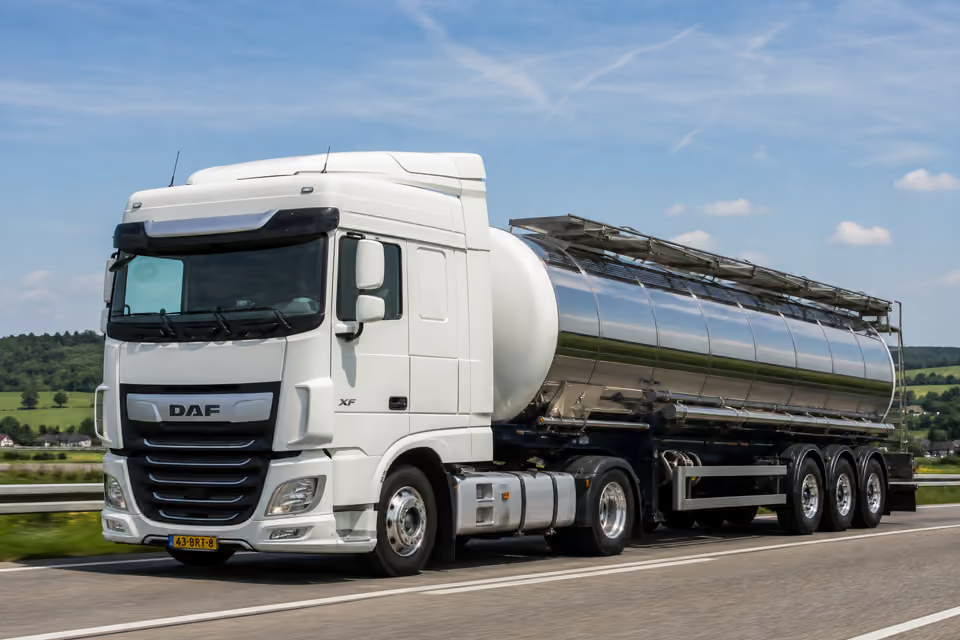
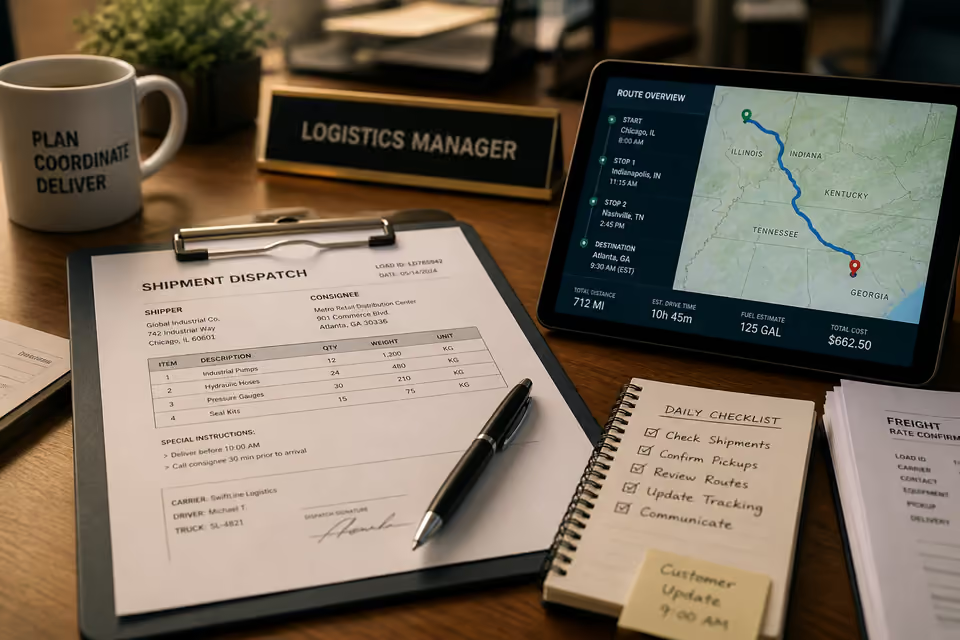
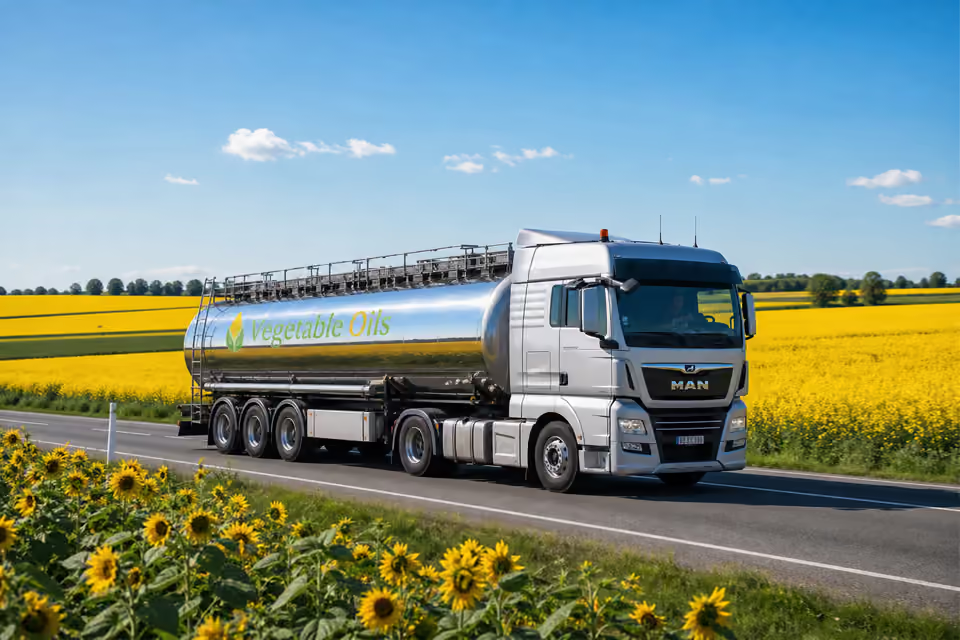
There is no “per kilometre” price for liquid bulk: the rate includes positioning the right tanker, wash, the plant window and discharge time. Comparing two numbers without that breakdown is comparing two different jobs.
Why there is no single price per kilometre
A tanker is specialised equipment: it must match the product, visit a suitable wash, arrive in a slot and discharge without damaging the batch. A kilometre rate without product and route hides part of the work.
For a first calculation we need product, volume, points, date, temperature regime, wash rules and ADR status. If some of that is unknown, start with the job in your own words — the firm figure appears after the technical match.
We do not publish a price list. Two hauls with the same kilometres can differ by wash, empty positioning and hours at the rack.
Route, empty run, tank availability
The rate includes bringing the matching tank to loading. A food-grade trailer after the right wash may not stand at the plant gate. For chemicals and ADR, availability depends even more on material, fittings and papers.
Belarus as a hub can be a domestic leg or the start of Russia, Kazakhstan or Europe. Addresses and windows change both kilometres and positioning time.
Wash and compatibility inside the rate
Wash is not a decorative invoice line. Cost depends on previous product, procedure, station and urgency. Food plants may require a certificate they recognise. Chemicals care about residues and materials; ADR adds procedure safety.
A certificate does not cancel history. If the tank fails the previous-cargo list, it is swapped — and positioning changes. We check wash and history before we freeze commercial terms — wash guide.
Heat and time at discharge
For oils, molasses, resins, bitumen, the cost is not only “a jacketed tank”. Connecting, heating, watching temperature and pumping take hours. If the receiver has no steam, that belongs in the plan — steam jacket.
A short BY–RU trip may wait on a plant window. Kazakhstan or China add distance and season. An EU site adds a slot and local rules.
We will match a tanker to your product
Send a phone number and the job in your own words. Product, volume and corridor speed clearance — with no price promised without parameters.
How country and corridor change the calculation
Belarus and Russia often allow a more direct road chain; local addresses still move the figure. Kazakhstan is a long regime. China may need stitching and forwarding. Turkey and Georgia add southern intake questions.
For Europe we fix the country: Poland is not Germany. Road tolls, border operations, possible transshipment and slot buffers sit on long legs. Geography is on corridors; the service line is the product: food, chemicals, ADR.
Own fleet or forwarding
Own tank still needs wash, history and a window. Attracted transport widens options and needs the same checks. In both cases the price follows a suitable trailer in the needed slot — not a slogan about “own fleet therefore cheaper”.
Forwarding helps when the chain has several legs. Agree what is included: finding the truck, tank check, papers, terminal, windows. Forwarding does not replace the transport line.
How to compare offers
Ask what is included: wash, positioning, demurrage, heat, terminal pump-over, papers, escort to discharge. Ask which tank and whether previous loads were checked. A cheap number without answers often grows after the first idle day.
A normal rate request: product and properties, tonnage, points, date, temperature, receiver rules, line. For Europe — country and city; via Georgia or Turkey — the country’s role in the chain. We reply with questions or a calculation, not a universal “from …”.
Example without fake precision
“Haul 24 t of oil from Belarus to Europe” is not yet a rate job. Country, city, window, oil type, tank history and discharge are missing. A number now would look convenient and almost surely change.
After “rapeseed, Brest–Poznań, 24 t, Friday loading, bottom discharge, confirmed food wash” we can check a tank, the wash station path, the slot and papers. Germany adds another leg; Kazakhstan another regime; Turkey or Georgia maybe another stitch.
Ask for a breakdown: positioning, wash, idle, heat, terminal, papers. Then you compare risk, not only digits. The data that cuts recalculation is in documents and in the request guide. An honest rate appears after the tank matches the product — not from a price list per kilometre.
Ask about the rate
What is inside a tank rate?
Usually route, positioning the matching tank, wash, regime, windows, idle and support. We fix the mix per haul so comparison is honest.
Is empty run to loading charged?
It depends where the matching tank and wash station are. If positioning needs extra kilometres, it sits in the calculation.
Why is oil more expensive than a dry van?
You need a food-grade tank, wash, history, discharge conditions and sometimes heat. Comparing kilometres only is the wrong test.
How does Belarus–Kazakhstan change the figure?
Distance raises the weight of regime, season, discharge time and availability of the right tank. We calculate from points and batch parameters.
Can I have a price list?
Not without parameters. A list would hide wash and windows. Send the job — we calculate that job.
How do I ask for a rate?
Product, tonnes, corridor, week, wash rule if any, phone. Contacts.
We will match a tanker to the product
A phone number and the job in your own words are enough to start.